

April 23, 2026
Close-Up on Democracy: 8th Grade Discovers Washington, D.C.
This is exactly how a group of Oakwood 8th graders capped off their two-week immersion course, American Studies: Close-Up. Through their 5-day trip to the nation’s capital last March, they gained first-hand knowledge of US history and how those historical precedents are put into action by policymakers today.
Following an early morning arrival at LAX, and some anxiety over news of rough weather in DC, the class embarked on their 2300-mile cross-country flight. After landing, they boarded a bus to their hotels, passing the Pentagon, the Washington Monument, and other sites they’d be visiting in the coming days.
The next day’s adventures began at the Franklin Delano Roosevelt Memorial, an immense 6,000-ton commemorative plaza composed of South Dakota red Carnelian granite. Bundled up against the 30-degree weather, students wandered amongst the soft pink-hued stones, before arriving at the towering sculpture of our 32nd president. Noticing that a small portion of his wheelchair was visible, one student surmised it was perhaps “because the artist still wanted to honor people with disabilities everywhere.”
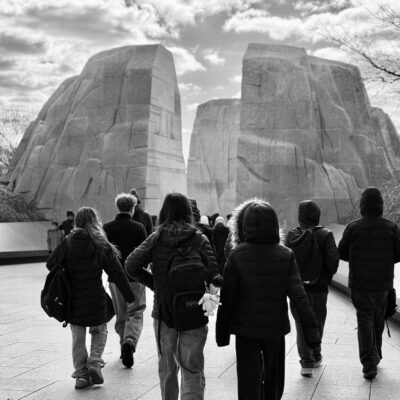
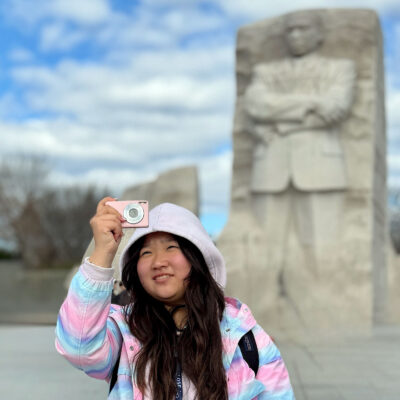
They moved on to the Martin Luther King Jr. Memorial, which includes the Stone of Hope, an imposing 30-foot-tall sculpture of the civil rights leader carved out of granite. Sculptor Lei Yixin drew inspiration for its design from a line in King’s “I Have a Dream” speech: “Out of the mountain of despair, a stone of hope.” “It looks like he’s emerging from the rock,” one student aptly observed.
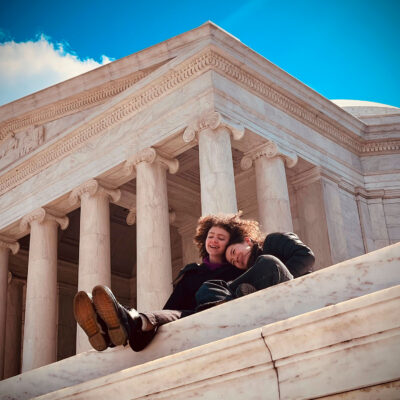
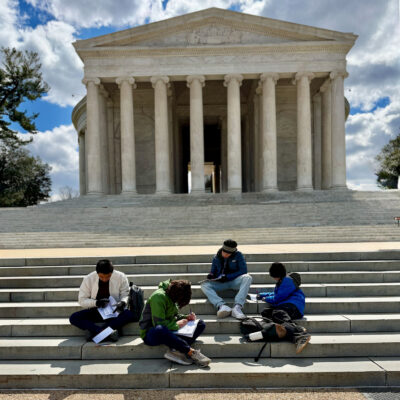
After lunch, the class made its way to the Thomas Jefferson Memorial, where a chaperone framed the encounter with a memorable quotation from Jefferson about the evolution of political thought: “I am not an advocate for frequent changes in laws and Constitutions. But laws and institutions must go hand in hand with the progress of the human mind….We might as well require a man to wear still the coat which fitted him when a boy as civilized society to remain ever under the regimen of their barbarous ancestors.”
On their way to the National Archives Museum, they passed through the city’s busy streets. Once inside, they came face-to-face with some of the nation’s most significant founding documents: the Declaration of Independence, the Constitution, and the Bill of Rights. As a tourist whispered to herself, “Now more than ever,” an eighth-grader nodded in quiet solidarity.
The day’s final stop was the National Portrait Gallery, where students encountered depictions of the individuals who have shaped the course of US history, and grappled with the often complex and contested legacies they left behind.


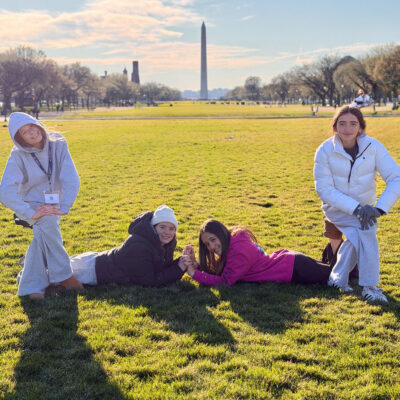
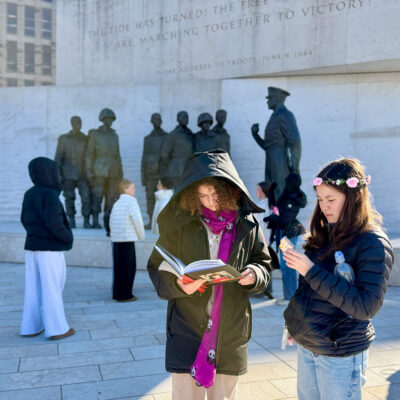
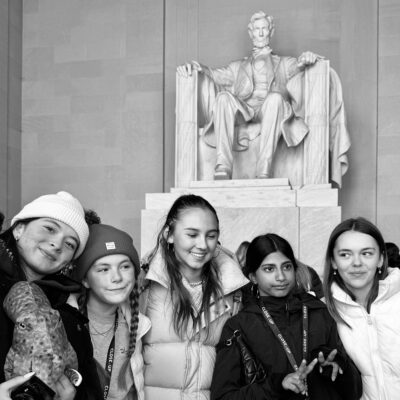
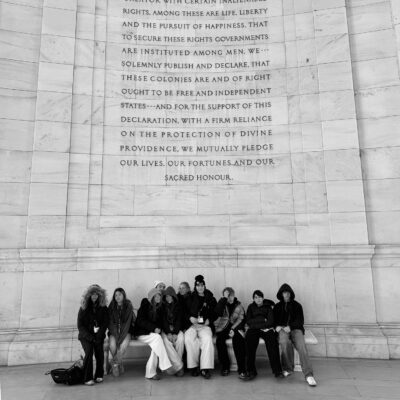

The third day began with a conversation with representatives from the World Wildlife Fund, who spoke about their commitment to conservancy. This meeting was followed by a visit to three memorials, beginning with the Abraham Lincoln Memorial, inscribed with his words to a fractured nation that take on renewed resonance today. “With malice toward none, with charity for all, with firmness in the right as God gives us to see the right, let us strive on to finish the work we are in, to bind up the nation’s wounds…”
The Vietnam Veterans Memorial had a profound effect on the group, prompting urgent questions:
“How many people died?”
“Do families come here to honor their loved ones?”
“Is there a memorial in Vietnam for those who lost their lives there?”
The Korean War Veterans Memorial gave a palpable immediacy to the conflict that took place some 7 decades ago. “It feels like the soldiers are creeping toward us through the rice paddies,” a student whispered, confronting its haunting sculptures.
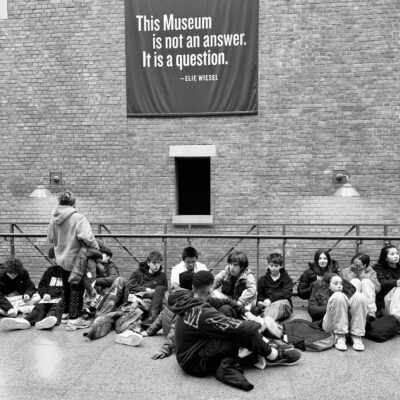
In the afternoon, they visited the United States Holocaust Memorial Museum, an encounter with historical trauma that sparked discussions about contemporary world events. Several students embraced the complexity of this conversation, accepting the discomfort with a sense of honesty and intellectual openness. The Close Up leader later remarked that it was “the smartest and most insightful conversation I’ve ever had with any group of visiting students.”
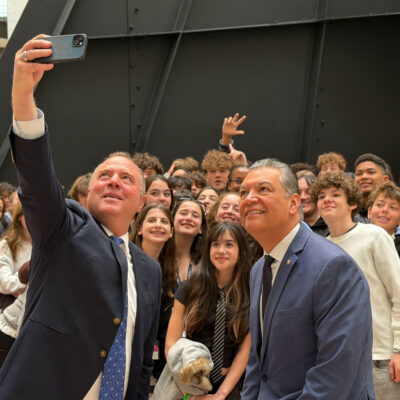
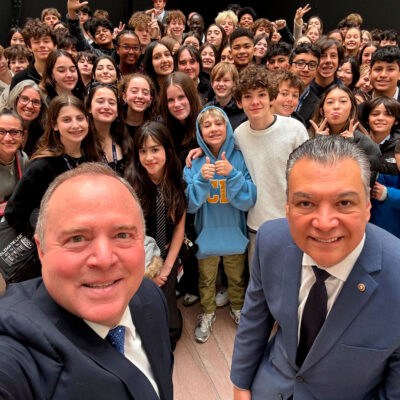
The last full day of the trip began with a Current Issues Deliberation session, where students debated each other on issues surrounding social media, a lesson in conversation and compromise similar to that of members of Congress and the Senate. They then headed to Capitol Hill, where students had the exciting and unexpected opportunity to meet with Senators Adam Schiff and Alex Padilla, who generously responded to students’ insightful questions with frankness and clarity, discussing various contemporary political matters from the current war in Iran to what Senator Schiff described as the “Orwellian”-sounding “Save America Act.”


The group proceeded to the National Museum of African American History and Culture, where they encountered the struggle and resilience of the African-American experience, beginning with the horrors of the Middle Passage. The story of Emmett Till left an especially indelible impression, as a student remarked: “Can you believe his mother insisted on having his casket open so the whole world could see what they had done to her child?”
The final day of the trip began at Arlington National Cemetery, where students walked through one of the nation’s most solemn and revered spaces. From there, the group visited the Smithsonian National Museum of American History before heading to Eastern Market for their final lunch together, reflecting on the questions, conversations, and moments that had stayed with them throughout the trip. That afternoon, the group headed to the airport for the journey home, returning to Los Angeles with memories of iconic landmarks and historic sites, along with a deeper understanding of the complexity, contradictions, and enduring impact of American history.